Add us as a preferred source
The president of the Royal College of Obstetricians and Gynaecologists talks about fixing the gynaecology backlog and rebuilding trust in maternity care.
Pressure on women’s health services in England has rarely been greater. Gynaecology waiting lists have surged in recent years, leaving many patients waiting months – sometimes years – for treatment for conditions that, while rarely life-threatening, can be profoundly life-limiting. At the same time, maternity services continue to face intense scrutiny following a series of high-profile failures and the independent investigation led by Valerie Amos, Baroness Amos, into maternity and neonatal services in England.
In the first part of a two-part interview, Alison Wright, president of the Royal College of Obstetricians and Gynaecologists, talks to Healthcare Today about the Amos Review, why gynaecological conditions have not been taken seriously in the past and why that is beginning to change.
I have to start with Baroness Amos’s investigation into maternity and neonatal services in England. Previous inquiries – Ockenden, East Kent, Shrewsbury and Telford – always identify the same problems. Are we on a hamster wheel?
There are several recurring themes that we must address. We have to accept that, historically, we have not always been the best at listening to women – and we must improve. However, it is also true that certain systems currently hinder our ability to facilitate that listening.
Regarding the Amos Review, we are incredibly keen to be engaged; obstetricians and gynaecologists truly want to be part of the solution. That might sound obvious, but we haven’t always had a seat at the management or policy-making tables – often simply because we are occupied in clinics and operating theatres. As the relatively new president, I am committed to ensuring that our profession is present when policy decisions are made. This means collaborating genuinely with governments, women and families to find a path forward.
A 360-degree approach is essential. Most importantly, we must listen to women and families, which is exactly what Baroness Amos and her team are doing. Furthermore, I believe it is vital to listen to staff regarding systemic change. We need more personnel and, crucially, protected time for training. This includes communication and listening skills, but also cultural competency.
We must acknowledge that systemic racism exists everywhere, including within the NHS and maternity services. We are aware of the unacceptable disparities in maternity care, but these extend to gynaecological care as well. For instance, when looking at gynaecology waiting lists, women from Black and South Asian communities are disproportionately affected – research indicates that Black women often wait significantly longer for specialist referrals and treatment compared to their white counterparts. This is an issue we must tackle head-on, and addressing systemic racism is something I am personally determined to lead.
“750,000 women in the UK are still on gynaecology waiting lists… If all those women were to line up shoulder to shoulder, the queue would stretch from London to Exeter.”
Are the maternity safety crisis and the gynaecology backlog essentially symptoms of the same cultural and structural problems? Is it just that there isn’t enough money and people aren’t listening?
We know there are fewer doctors and midwives on the shop floor than in the past, yet, quite rightly, demand has increased. As we successfully raise awareness of conditions like endometriosis and fibroids, more women are coming forward – but we are currently unable to match that demand with the necessary capacity.
Similarly, within maternity services, our Caesarean rates have doubled – and in some regions tripled – compared to 15 or 20 years ago. This is driven by several factors, and it is crucial that maternity services are appropriately prepared with the right staffing levels, training and facilities to manage increasingly complex births and increasing interventions.
In other instances, we are simply becoming better at identifying problems with a baby earlier, which is also a good thing. It is a complex, mixed picture, and we need to explore the underlying reasons further. For now, however, it remains a fact that Caesarean rates have increased so dramatically that we simply do not have the staff or the theatre capacity to keep pace. This has a massive impact on everyone involved – most importantly, the women accessing these services.
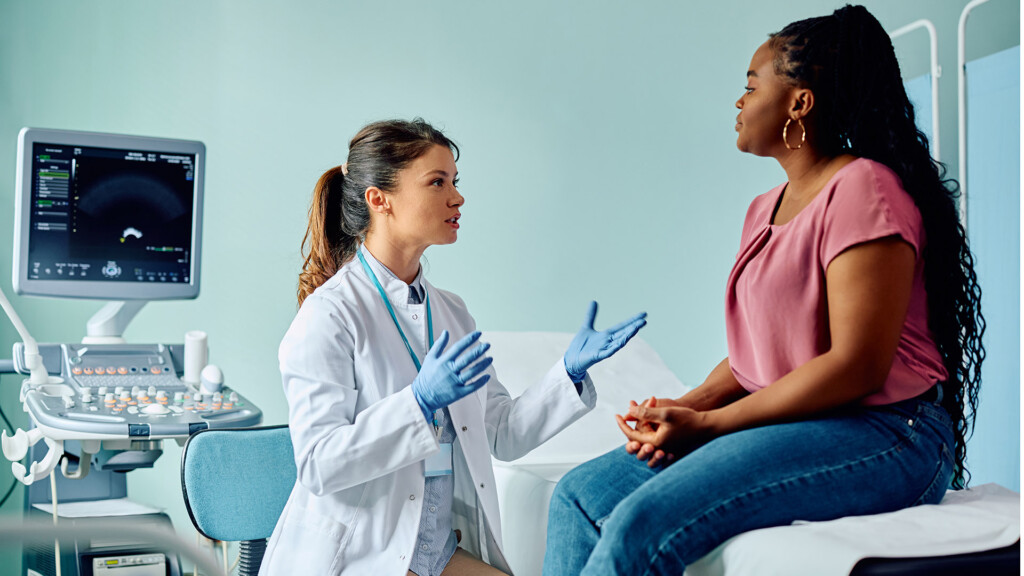
How bad is the gynaecology backlog right now, and what does that mean in real terms for women’s health outcomes?
The reality, according to our latest report, is that 750,000 women in the UK are still waiting for a way forward on gynaecology waiting lists. To put it into perspective, if all those women were to line up shoulder to shoulder, the queue would stretch from London to Exeter.
In the past, people often referred to this field as “benign gynaecology,” but we no longer use that term. Conditions such as endometriosis and fibroids are debilitating and life-altering; they deeply impact a woman’s ability to function in her daily life. Crucially, these conditions often worsen while women are left waiting.
One in four women on the waiting list end up needing to access A&E. They may require an emergency blood transfusion or urgent intervention – treatment that would be entirely unnecessary if they could have accessed the care they needed in the first place.
“We must listen to women properly; we must take the time to truly hear their symptoms.”
Many gynaecological conditions – endometriosis, heavy menstrual bleeding, prolapse – are not life-threatening but can be life-limiting. Why has the system historically undervalued these illnesses?
This crisis stems, in part, from women’s position in society; women and their health are simply not valued or prioritised as much as they ought to be. However, we are hopeful that the refreshed Women’s Health Strategy – due to be released shortly – presents a genuine opportunity to re-establish a renewed ambition for women’s health across the board.
You are absolutely right regarding the severity of endometriosis. Twenty years ago, the renowned gynaecologist Ray Garry conducted research into pain scores associated with the condition; he found that they were often higher than those described by patients with advanced cancer. When you consider that the pain scores for women with endometriosis are so extreme, you have to ask why people haven’t taken more notice.
I am afraid the answer is that women’s health, generally speaking, has not been a priority.
With Endometriosis Action Month in March, there are some truly exciting innovations in diagnosis on the horizon. First and foremost, however, we must listen to women properly; we must take the time to truly hear their symptoms. We also need clear referral pathways. We now have dedicated endometriosis centres with specific expertise, and we work closely with Endometriosis UK – an amazing support group with a wealth of knowledge to share.
We must all work together, alongside governments, to raise awareness and empower women. This includes the development of Women’s Health Hubs, which involve closer collaboration with GPs in primary care and colleagues in sexual health. By providing these wraparound services, we can ensure women access help much sooner. Historically, it has taken years to reach a diagnosis for endometriosis; it is simply not acceptable for women to suffer for so long on a list, waiting just to see someone before they can even be referred for specialist care.
Are we heading into a world where women’s health, in its broadest sense, is being taken seriously?
I genuinely hope that we are at a turning point – that is certainly my dream. You are absolutely right, particularly when it comes to the menopause. I was discussing this with Davina McCall at a menopause event only the other night; 15 years ago, while I was with the British Menopause Society, we struggled to find a single celebrity willing to speak publicly about the subject. That really wasn’t all that long ago.
Thanks to Davina and others sharing their own experiences, we have seen a total shift in awareness. Now, women are talking about the menopause in the workplace; they feel empowered to visit their GP and speak openly about their symptoms. It has been a genuine game-changer – not just for the menopause, but for raising the profile of endometriosis and fibroids too.
In my own practice, I see a similar shift regarding stress incontinence. Historically, women were often told that such issues were simply “part of being a woman” and that they should just get on with it. Today, we are determined to take these aspects of women’s health seriously. The care and the treatments are available – our task now is to facilitate women in accessing that appropriate care.