Add us as a preferred source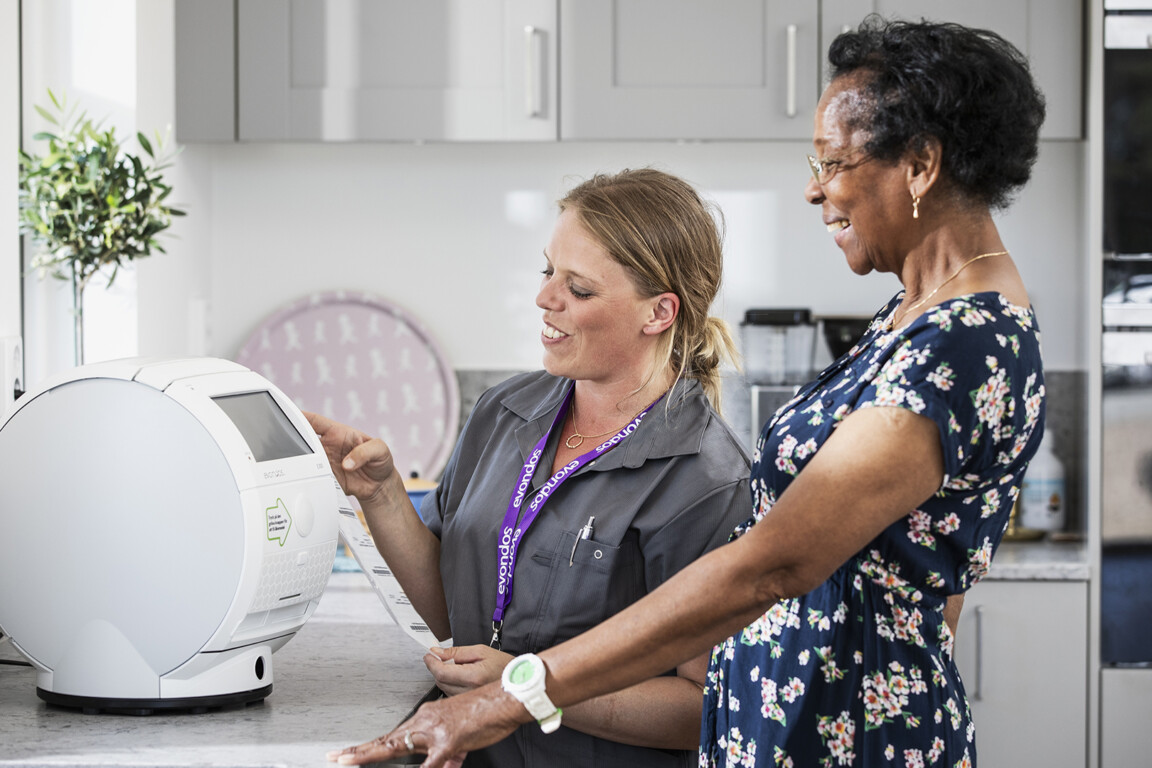
Nick Hucker, the newly appointed UK managing director of Evondos Group, talks about keeping people out of hospital and how technology fits into a discharge pathway.
The routine medication run has become one of the most significant, yet avoidable, pressures on the UK’s social care system. For Nick Hucker, newly appointed UK Managing Director of Evondos Group, the solution isn’t just about smarter hardware – it is about a fundamental shift in how we deliver care at the neighbourhood level.
With nearly two decades of proven success in the Nordic markets, Evondos enters the UK at a critical juncture. As the NHS pivots from analogue to digital and from hospital-based treatment to community-led prevention, Hucker is tasked with moving the conversation beyond the pilot phase. His vision for the UK is one of deep systemic integration, where automated medicine dispensing acts as a safety net and frees up human carers to focus on social and emotional support.
Here, Hucker talks to Healthcare Today about the elephant in the room regarding health and social care funding, the surprisingly personal relationship patients build with their devices, and how a 99.7% medication adherence rate can transform not only individual lives but the entire care system.
Evondos talks about supporting independence and keeping people out of hospital. What actually changes in a patient’s day-to-day care? How do you do it?
Evondos is not a flash-in-the-pan newcomer; the company has been established for 18 years and is currently the leading automated medicine dispensing firm across seven markets. To date, we have dispensed over 120 million doses, averaging approximately 40 million doses per year. Fundamentally, our model involves collaborating with Integrated Care Boards (ICBs), local authorities, and technology-enabled care providers to integrate our products directly into patients’ homes.
Our primary focus is to enable individuals to live independently for the long term. This mission aligns perfectly with the government’s 10 Year Plan and the shift toward neighbourhood-based care. We work across various care pathways, generally supporting patients with complex polypharmacy needs – those taking three to five tablets, multiple times a day. We coordinate with pharmacies to package medication into pouches, which are then loaded into the device. At the appropriate times, the device notifies the patient to take their dose. Crucially, the system includes a video capability, allowing us to ensure that medication is being taken exactly as required.
The scale of the challenge is significant; the World Health Organization notes that medication adherence typically sits at around 50%, yet many of the patients we encounter have adherence rates as low as 40%. Our pilot data demonstrates that we can increase this to an extraordinary 99.7%.
Currently, around 33% of a carer’s time is spent on routine medication runs, often during the high-demand early morning period. By automating this process, we remove the need for those routine visits, freeing up overstretched carers to provide more meaningful, high-quality support.
“A common challenge in the UK healthtech sector is that many technologies reach the pilot stage but fail to scale effectively.”
Can you quantify the impact? What does success look like?
One of the most important shifts I have introduced to the business and the team is the move away from simply selling technology. We are not interested in merely selling a product to our partners. Instead, our focus is now entirely on demonstrating a clear tripartite benefit: a tangible improvement for the patient, a practical advantage for the care provider, and a demonstrable financial saving for the commissioner.
To achieve this, we analyse each distinct care pathway to identify the metrics that matter most to that specific stakeholder. For some, the priority is often getting people out of hospital beds and back into their homes as quickly as possible. In other settings, the primary concern might be medication adherence or the reduction of avoidable readmissions. By identifying these key performance indicators early on, we can track the specific data that is most relevant to the pathway, the patient and the care provider involved.
How does your technology fit into a discharge pathway? At what point does it get introduced?
As a relatively new entrant to the UK market, our current focus is on building strategic relationships. We are now known to almost every Integrated Care Board (ICB) in the country. While there was a broader push across all 42 ICBs initially, we have now refined our priority to a select group of 27 that demonstrate the highest readiness for digital adoption and the specific type of technology we provide.
The feedback from these ICBs is consistent: they recognise a clear clinical need for our solution. However, we must then address the elephant in the room – funding. A common challenge in the UK healthtech sector is that many technologies reach the pilot stage but fail to scale effectively.
What happens if there’s a problem with the patient and the patient deteriorates?
A critical differentiator for our platform is that we do not simply offer medication dispensing; we provide a robust means of monitoring and interacting with the patient. Our video technology allows for a high degree of proactive engagement. For example, if there is a concern, we have the capability to initiate a call to a patient – let’s call her Mrs Smith – to check on her well-being and confirm that her medication has been taken.
There are rigorous protocols in place to manage these interactions. If a patient does not respond to these video calls or if the medication remains untaken, the system escalates the situation until a carer is dispatched to the home for a physical welfare check. This ensures that no lapse in adherence or health goes unnoticed.
What happens if something goes wrong? Wifi/power etc? How do you deal with that?
The reliability of our technology is underpinned by a high rate of remote fixes. In the rare event of a technical issue, we can resolve the vast majority of problems without a physical site visit, which is a significant differentiator for us. However, we also maintain incredibly stringent protocols to account for real-world variables such as Wi-Fi outages or power failures. These contingencies are built into every care package we develop with our partners.
We have had instances where our teams were deployed on Christmas Eve following a power-cut anomaly to ensure a patient received their medication within the required clinical window. We leave nothing to chance because the stakes are undeniably high. Medication non-adherence is linked to an estimated 200,000 deaths annually and costs the NHS approximately £500 million in avoidable hospital readmissions. Our mission is to ensure that medication is administered safely and at the correct time, and every care provider we work with is covered by these exacting safety standards.
“The most profound feedback comes from the patients themselves, who report a newfound sense of independence.”
To what extent is your model about addressing workforce shortages in community care? Are you just replacing elements of human care or augmenting them?
When we engage with care providers, we demonstrate that our goal is never to reduce headcount. While the sector faces significant budget and staffing challenges, the need for care is constant. Our role is to free up time, not eliminate roles.
The ripple effects of this efficiency are remarkable. In one recent case in Sweden, a single provider was able to reduce their travel by 70,000 kilometres per year. By removing those routine medication journeys, they not only saved vast amounts of time but also met their Net Zero targets.
Ultimately, the most profound feedback comes from the patients themselves, who report a newfound sense of independence. Consider the traditional morning routine: a carer might have 14 visits to complete between 0800 and 0900, meaning many patients are left waiting. Our technology grants them the freedom to manage their own schedule. When the care provider does arrive, the visit is no longer a rushed, functional medication run; it becomes an opportunity to focus on the vital social and emotional aspects of care.
What’s the biggest barrier to adoption at the moment?
It is no secret that the most significant hurdle for any new technology in this space is determining the funding mechanism. This is our primary area of development. We are focusing on the intersection of healthcare and social care, asking the critical question: how do we work with our partners to move a project from the pilot stage to a state of scale and sustainability?
My team and our various partners are dedicated to ensuring that our solution is not viewed as an optional add-on, but as a core component embedded within clinical pathways. Our goal is to become a fundamental part of the existing healthcare infrastructure, providing a long-term, sustainable answer to the challenges of medication adherence and independent living.
What does success look like for Evondos in the UK over the next three years? What were your goals?
Our strategy is inextricably linked to the three major pillars of the current government health policy: the transition from analogue to digital, the shift from treatment to prevention, and the move from hospital-based care to independent living. These national goals are entirely consistent with our own mission to enable patients to live safely and independently in their own homes for as long as possible.